

News

CoLABOR publishes eBook with reflections on the Social Security System
With this ebook, CoLABOR intends to contribute to a demanding reflection on the Social Security welfare system and enrich it with the critical analysis of four former ministers of Labor, Solidarity and Social Security and the current Minister responsible for the portfolio.

CoLABOR hosts QuizLABOR session at Michel Giacometti School
CoLABOR went to school. It was with enthusiasm that our team was welcomed for a special QuizLABOR session.

International cooperation at CoLABOR
COLABOR had the pleasure of welcoming Joyup Ahn, Senior Fellow at the Korea Labor Institute (KLI) and member of the Minimum Wage Commission of Korea.

CoLABOR participates in the Academy on Decent Work for Social Justice
CoLABOR presented DataLABOR at the Academy on Decent Work for Social Justice

CoLABOR starts Managender project
CoLABOR will study the obstacles to women's access to leadership positions, a reality with negative impacts on well-being and the economy.

CoLABOR elects new Governing Bodies for the three-year period 2025-2027 and approves Activity Plan 2025
CoLABOR begins a new cycle with the inauguration of its Governing Bodies for the 2025-2027 period.

COLABOR was present at the Kickoff Meeting of the FUTOURWORK project
CoLABOR is part of the consortium of the international project approved by Horizon Europe, FUTOURWORK, which seeks to bring new perspectives to the way in which labor issues are addressed in the tourism sector.


COLABOR launches Pay Comparison Simulator
With CoLABOR's Salary Comparison you can compare your salary with that of other workers in Portugal (private sector) and see how you rank by age, gender, education and profession.

CoLABOR is part of the FUTOURWORK project consortium, funded by Horizon Europe
CoLABOR is part of the consortium of the international project approved by Horizon Europe, FUTOURWORK, which seeks to bring new perspectives to the way in which labor issues are addressed in the tourism sector.
CoLABOR presents QuizLABOR at the European Researchers' Night
CoLABOR participates in the European Researchers' Night with QuizLABOR Interactive Game
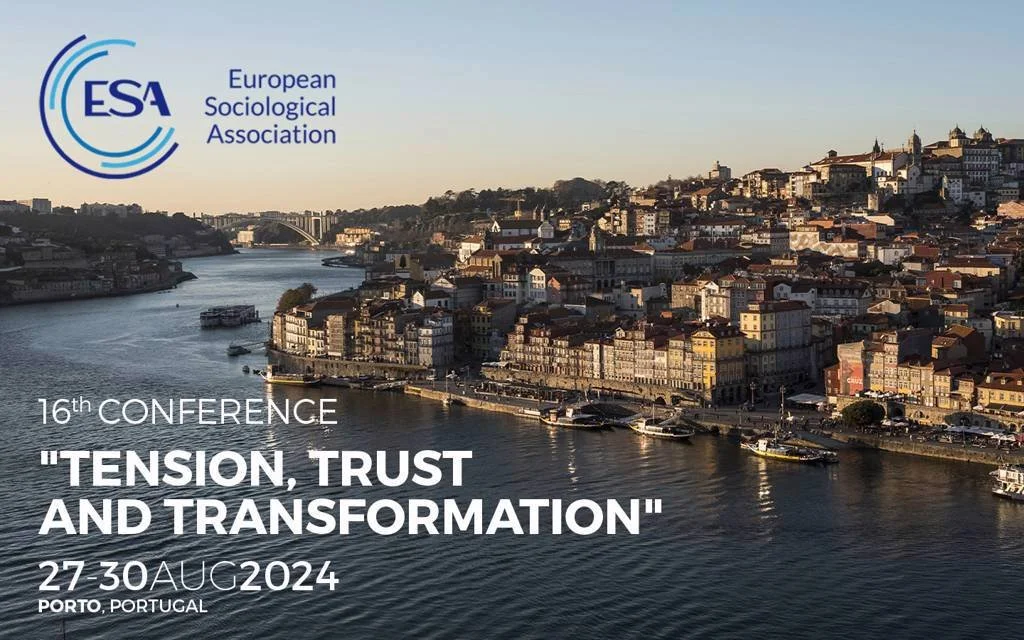
CoLABOR attends the 16th Conference of the European Sociological Association (ESA)
The conference brought together sociologists from across Europe to discuss recent global challenges such as the pandemic, climate change, growing inequalities and populism, and to explore the transformative impact of sociology on contemporary society.

New Project "Building the Theory of Change of the National Strategy to Combat Poverty 2021-2030"
The aim of this project is to provide technical and critical support for the participatory construction of the Theory of Change (ToC) of the National Strategy to Combat Poverty 2021-2030 (ENCP) and to contribute to the planning of future evaluation exercises.

CoLABOR study analyzes qualification (dis)adjustments in the Portuguese labor market
The new study entitled "(Dis)adjustments in Qualifications in Portugal: Evolution, Incidences and the Importance of the Starting Point", analyzes the qualifications of the Portuguese population over the last two decades and the impact on employment dynamics

New publication in the "Policies in Analysis" editorial line presents a reading of the Decent Work Agenda
This publication offers an in-depth and critical overview of recent legislative changes and their impact on the Portuguese labor market.

CoLABOR is part of the consortium of the international project REMAKING (Copy)
The project aims to develop an analytical framework that reflects the new and multifaceted realities associated with Remote Working (RW). CoLABOR is leading Work Package 4 (WP4) entitled "Economic and Social Effects of Remote Working".
COLABOR assesses impact of REPowerEU plans
The Policy Study "How can RepowerEU consolidate Recovery", by Franco Tomassoni and Tiago Santos Pereira, CoLABOR researchers, is part of the Recovery Watch project's series of publications aimed at monitoring the REPowerEU plans and the National Recovery and Resilience Plans of Denmark, Estonia, France, Portugal and Spain regarding energy security and the ecological transition.


50 YEARS OF APRIL IN NUMBERS
Divided into four main themes - Work, Employment and Income; Social Protection; Population and Demography, Education, Health and Housing - this initiative allows us to portray the processes of social, economic, demographic and institutional change that have taken place in Portugal over the last few decades.